About Drilling Attachments
What is a rock drilling attachment and how does it work?
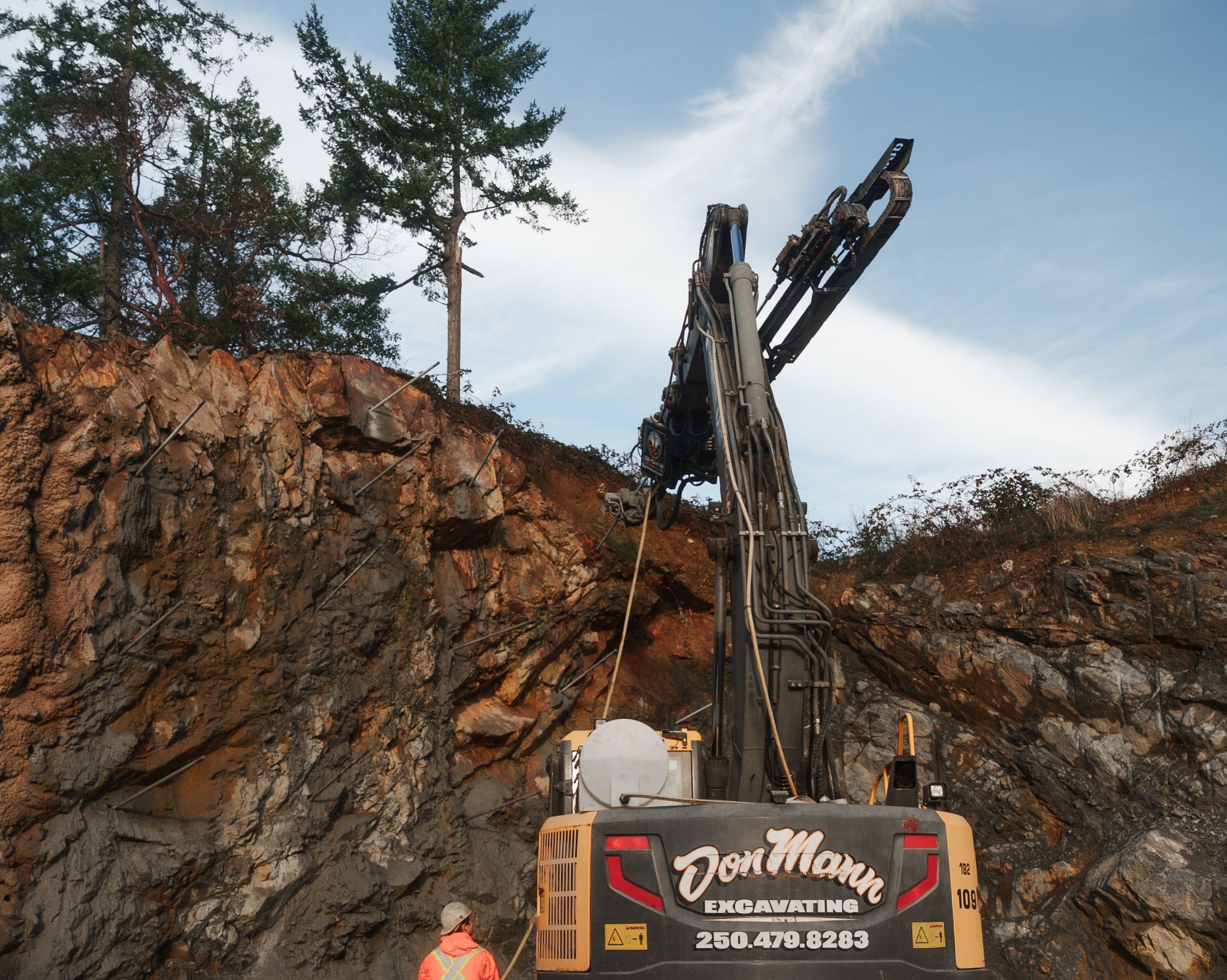
A rock drilling attachment is a hydraulic and pneumatic-powered tool that mounts to equipment like a skid steer or excavator. It uses the hydraulics of the carrier machine (skid steer or excavator) as the primary power source and additional compressed air depending on the application to drill efficiently through hard rock, limestone, shale, sandstone, and more.
Can I use one drill attachment on multiple machines?
In many cases, yes. Some mounting systems are designed to work across multiple compatible skid steers or excavators. In general, our skid steer drilling attachment can be operated most standard size skid steer with no adaptation needed. Excavator attachments can also be used on most available excavators as long as hydraulic flow and pressure is met. Additionally, mounting an Excavator Attachment will require the correct size adapter on the drill to be compatible with the excavator pin sizes.
Can your drills attach to my existing equipment?
Yes. Our drills are designed to mount directly to your existing skid steers and excavators, allowing you to use equipment you already own, or rental equipment, instead of investing in a standalone drill rig.
Are rock drilling attachments better than standalone drill rigs?
For many contractors, attachments provide:
- Lower ownership costs
- Better transportability
- Greater flexibility
- Easier use with existing equipment
Standalone drill rigs may still be preferred for extremely high-production or specialized applications.
Rock Drilling Basics
What is the best way to drill through rock?
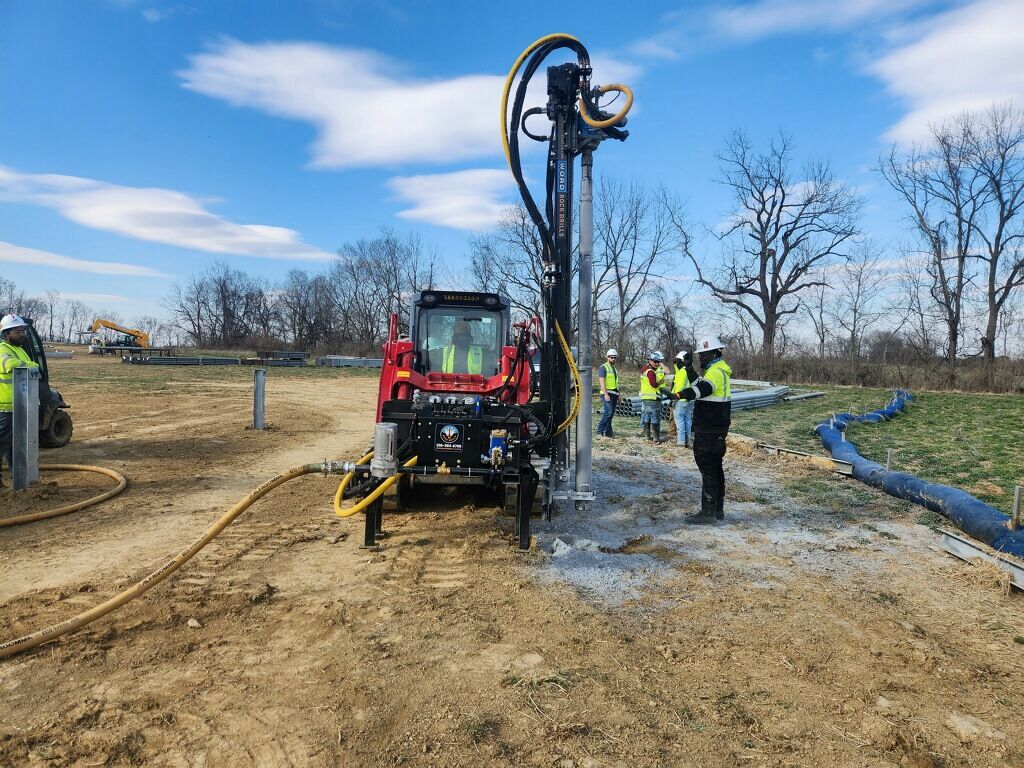
The best method for drilling through rock depends on the rock hardness, hole diameter, and depth required. For hard rock applications like limestone, granite, and sandstone, contractors commonly use a drilling attachment equipped with down-the-hole (DTH) hammer tooling mounted to a skid steer or excavator.
Can a skid steer drill through rock?
Yes. A skid steer can drill through rock when equipped with the proper rock drilling attachment and air compressor system. Many contractors use skid steer-mounted drills for fencing, utility, and construction applications because they are compact and easy to transport.
Can an excavator be used for rock drilling?
Yes. Excavators are commonly used for rock drilling attachments because they provide excellent reach, stability, and flexibility on uneven terrain or large jobsites.
What is a down-the-hole hammer drill?
A down-the-hole (DTH) hammer drill uses compressed air to power a hammer directly behind the drill bit. This creates fast, efficient penetration in hard rock while maintaining straighter holes and better drilling performance.
What’s the difference between an auger and a rock drill?
An auger is designed primarily for dirt and softer materials, while a rock drill uses pneumatic hammering technology to penetrate hard rock formations efficiently.
Will this work in extremely hard rock?
Yes. Our Down-the-hole hammer drill configurations are specifically designed for:
- Limestone
- Sandstone
- Solid bedrock
Performance depends heavily on proper compressor sizing.
Technical Information
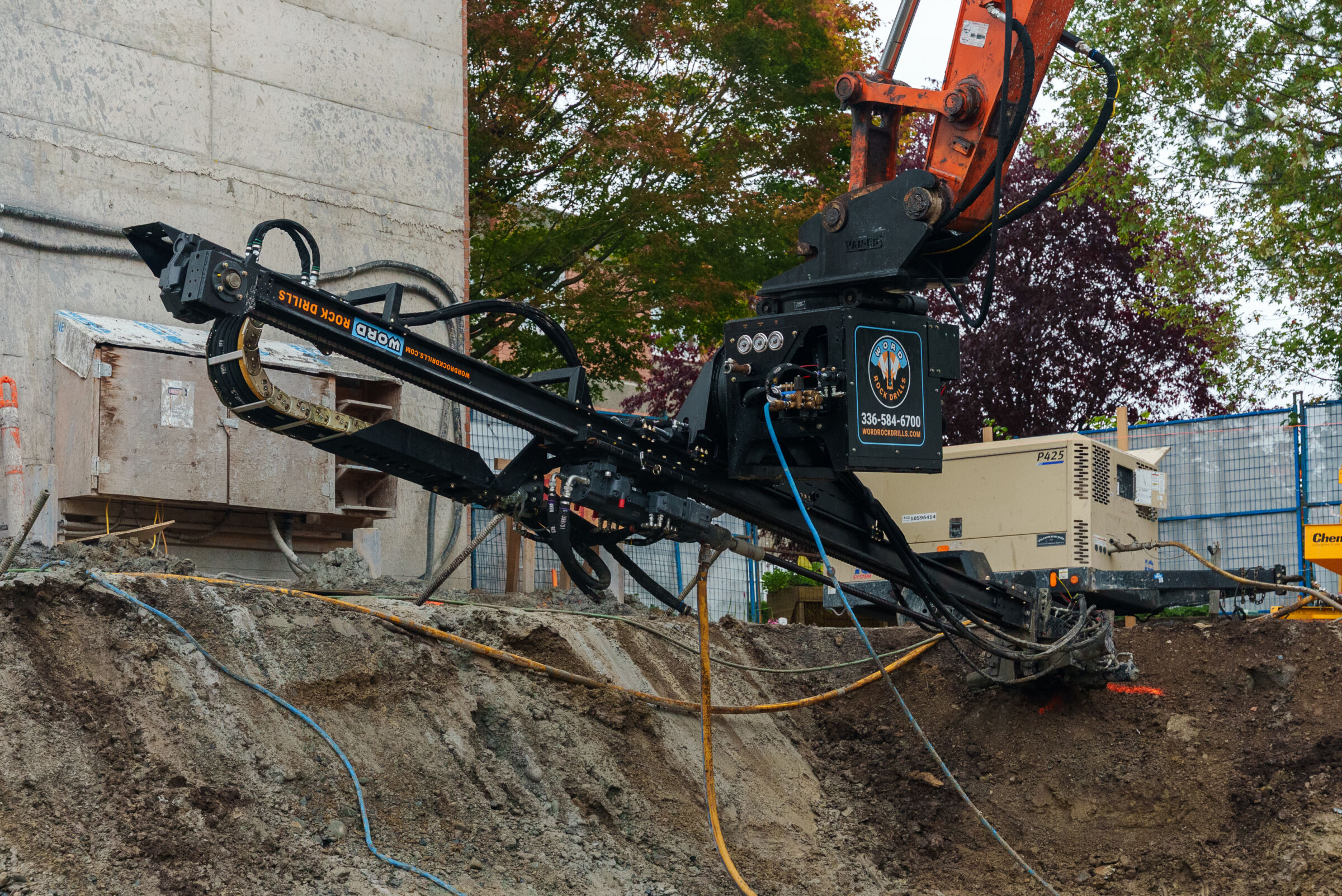
What size holes can your drills handle?
Hole sizes vary depending on the model and setup, but typical applications include:
- Small diameter: 1″–4″ (blasting, soil nailing, grounding rods, etc.)
- Medium diameter: 5″–12″ (pre-drilling, casing, anchors, posts)
Can rock drilling attachments drill at different angles?
Yes. WORD drilling systems can be equipped with dual 360 rotation that allows for drilling vertically, horizontally, or at custom angles for applications like:
- Soil nailing
- Anchoring
- Slope stabilization
- Specialty construction
Do I need an air compressor to run the drill?
Yes. In most cases an air compressor is required to power the hammer and clear debris from the hole. Compressor size (CFM/PSI) directly impacts drilling speed and efficiency. Your WORD Sales Rep will discuss air compressor specs with you to help determine what you will need for your specific drill configuration and project.
Compressor sizing depends on:
- Drill model
- Hole diameter
- Desired production speed
- Ground conditions
Larger compressors generally improve drilling speed and performance.
How deep can a skid steer rock drill go?
Drilling depth is impacted by several variables, standard depth capabilities vary by drill model and application in addition to environmental factors. We have had customers successfully drill up to 175’ in the right conditions. Your WORD Sales Rep will be able to advise on production expectations based on your project specifications.
Drilling Application
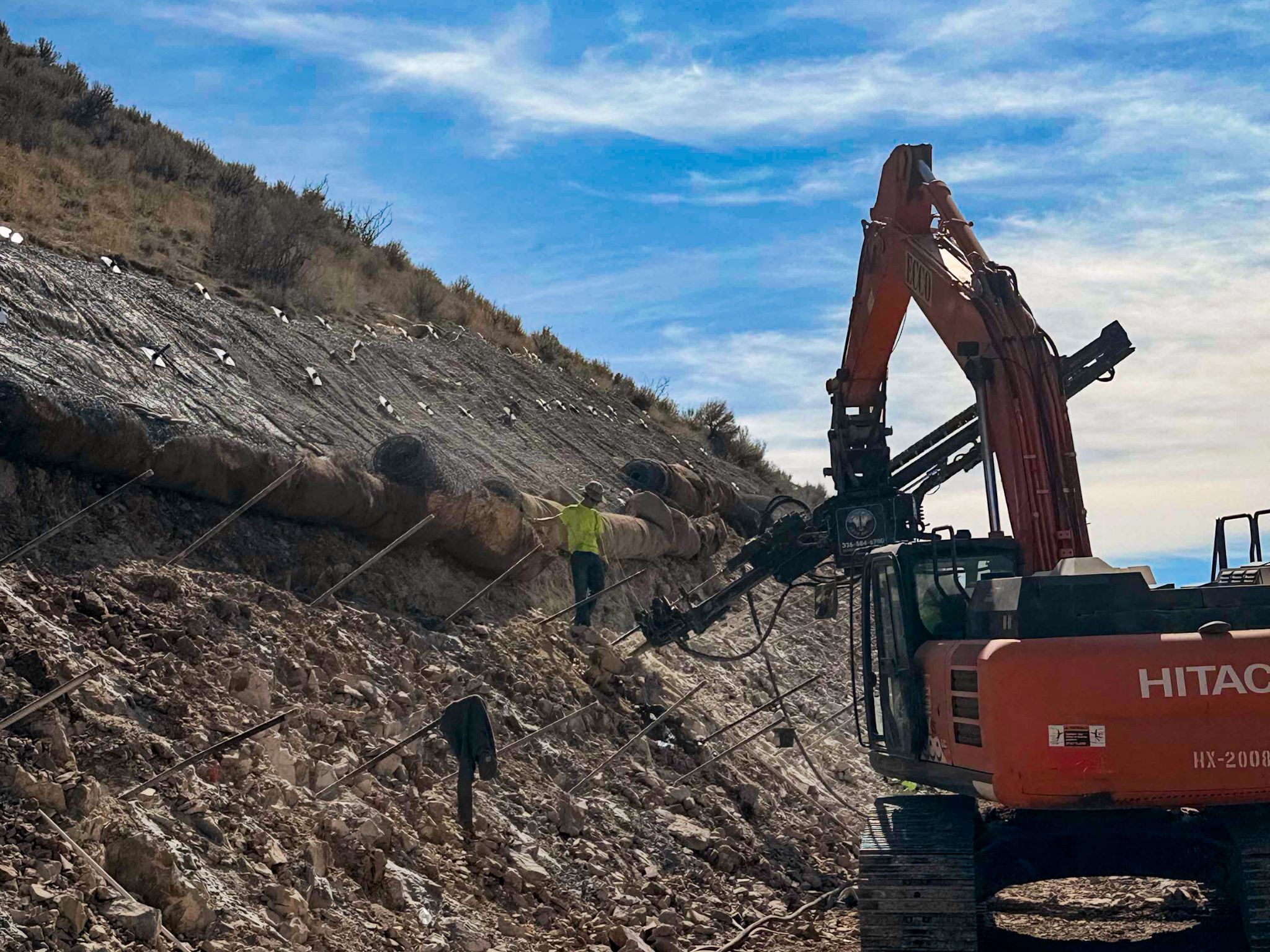
How do I know which drill is right for my application?
Your WORD Sales Rep will help build the best drilling attachment for your job. The right drill depends on:
- Hole diameter and depth
- Ground conditions (soil vs. hard rock)
- Desired production rate
- Jobsite requirements
- Carrier machine specs (flow, lift capacity)
Most customers start with a short discovery call with a member of our team to properly size the drill for their specific job.
What types of projects are these drills used for?
Our customers commonly use rock drilling attachments for:
- Utility and infrastructure projects
- Soil nailing and tiebacks
- Blasting and pre-drilling
- Solar Helical pile and anchor installation
- Limited access stope work
How much production can I expect?
Production depends on:
- Carrier machine hydraulic flow
- Rock hardness
- Compressor size
- Hole size and depth
Customers often choose higher-performance models when they need high production output (thousands of holes). Our WORD Sales team works extensively with each customer to review configuration options and align them with project needs.
Can I use the same drill for both rock and dirt?
Yes, but performance varies. Many customers use:
- Augers drills for softer ground
- Down-the-hole hammer drills for hard rock
Some drill setups allow you to switch drilling heads between jobsites to best tackle the applications. Discussing the full scope of work you wish to use your drill for with your WORD Rep will help them spec out the best configuration.
What applications use rock drilling attachments?
Common applications include:
- Fencing
- Foundation Construction
- Utility Grounding
- Geotechnical Slope Stabilization
- Mining & Mine Saft Stabilization
- Quarrying
- Solar Foundation Installation
- Infrastructure Development
- Rockfall Mitigation
- Slope Repair
- Micropiles, Tiebacks, and Anchors
- Dewatering
- Limited Access Construction
How do contractors drill rock for utility poles or anchors?
Utility and infrastructure contractors typically use excavator-mounted drilling systems with compressed air hammers to create anchor holes, pole foundations, and rock sockets efficiently.
What is the best drilling method for soil nailing?
Soil nailing applications use excavator-mounted rock drills capable of drilling at multiple angles with high precision. These rigs are commonly equipped with hydraulic top hammer drifters with integrated swivels capable of air, water and grout flushing.
Is this better than traditional drill rigs?
For many contractors, yes. Attachments offer:
- Lower upfront cost
- More flexibility
- Use of existing equipment or locally sourced equipment
- Better access in tight or low-clearance areas
Purchasing & Delivery
How much does a rock drilling attachment cost?
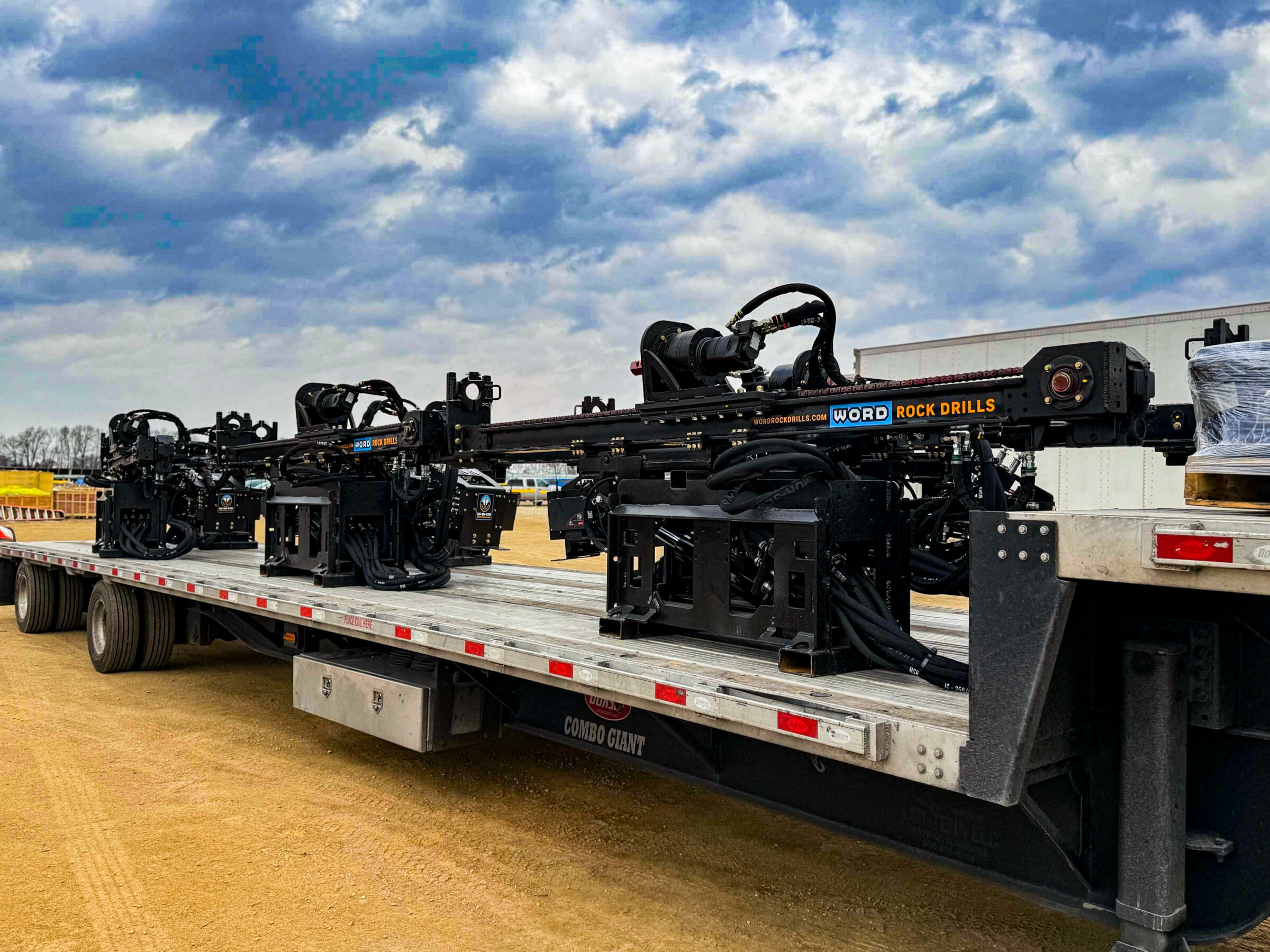
Pricing varies based on configuration, but as an integrated hydraulic drilling mast, WORD systems typically fall in the $65,000 – $150,000 range for a fully equipped unit with tooling. A variety of machine details impact cost including carrier, drive motor, attachment size, and any customizations.
Do you offer financing or payment options?
Yes. Common options include:
- Alternative Third-party financing options available through a trusted partner
- 50% upfront / 50% before delivery
- Rental or RPO
Can I rent a rock drill before buying?
In many cases, yes. We have a growing fleet of rental units available direct and, if we don’t have what you need, we may be able to connect you with one of our distributors.
How quickly can I get a drill?
Lead times vary based on:
- Current inventory
- Custom build requirements
- Rental availability
Some units may be available immediately, while custom builds require production time. Typical production time ranges from 6-10 weeks.
Do you have distributors near me?
Yes. We work with distributors across the U.S. and Canada who can:
- Assist with local setup
- Provide rentals
- Support service and parts
Can I see the drill in action before buying?
We have a robust video library with real jobsite footage that gives you the chance to see how WORD drills are used for a variety of drilling setups. In addition to our video content, there may be opportunity to schedule a live demo at our production facility in Elon, North Carolina or coordinate with our strategic partners for an on-site demonstration. Most customers review videos early in the process to understand performance.