

In the world of infrastructure construction, there’s a common belief that bigger equipment means better performance. Large, all-in-one drill rigs have long been the standard on job sites — a symbol of strength and capacity. But in today’s fast-paced market, where adaptability and efficiency often trump brute force, that old assumption deserves a closer look.
At WORD Rock Drills, we’re seeing a quiet revolution: contractors are discovering that attachments for skid steers and excavators can outperform traditional rigs in ways that directly impact their bottom line — and help them win more bids.
The Heavyweight Dilemma
Owning and operating a large drill rig comes with a hefty price tag. Beyond the initial investment (which can easily exceed six figures), there are transport permits, specialized operators, and maintenance costs that pile up quickly.
These rigs often require significant mobilization time, limiting your ability to respond quickly to changing site conditions. In today’s market — where contractors are expected to be on-site yesterday — those delays can mean lost revenue and missed opportunities.
Attachments: Small But Mighty

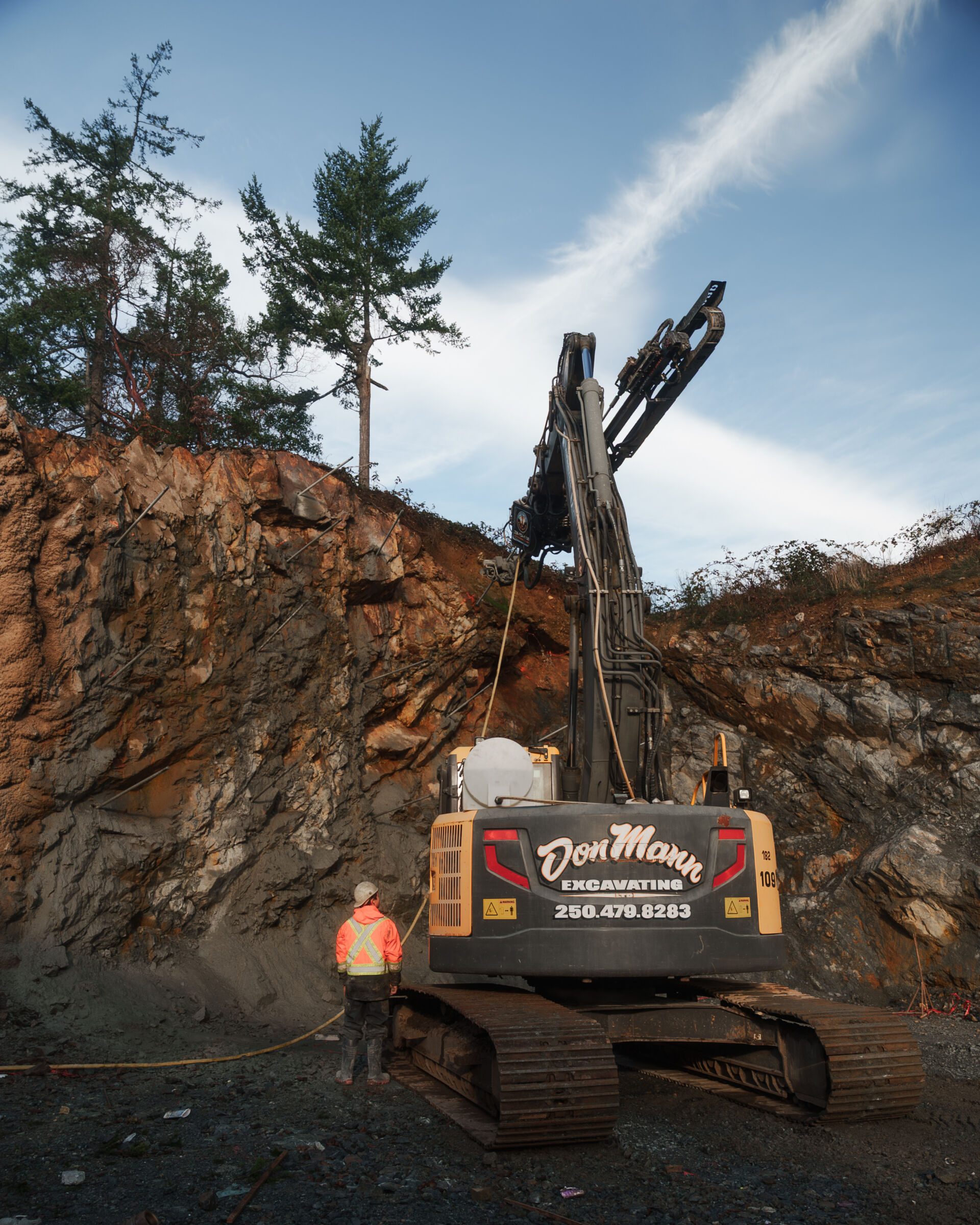
Skid steer and excavator drilling attachments flip this equation on its head. Instead of a dedicated rig, you’re using machines you likely already own and operate every day. Equipment that is already on-site and ready to mobilize, just waiting for you to hook up the attachment.
Here’s what that means in practice:
- Reduced capital expenditure: You can upgrade your drilling capabilities without tying up massive capital in a single-purpose machine.
- Faster mobilization: No need for special transport or permits. Move from job to job with the equipment already on your trailer.
- Increased versatility: Switch between tasks seamlessly — drilling, digging, lifting — using the same carrier machine.
Real-World ROI
Let’s consider a mid-sized contractor working on a utility infrastructure upgrade. Traditionally, they might have relied on a dedicated drill rig, requiring two operators, a transport crew, and a multi-day mobilization process.
By transitioning to an excavator drilling attachment, they reduced crew size, eliminated rig mobilization delays, and began drilling within hours of arriving on-site. The result? They completed more jobs in less time — and freed up capital to invest elsewhere in their business.

Winning More Bids with Agility
Project owners and general contractors are increasingly looking for partners who can adapt to changing scopes and timelines. By using attachments, you become that partner.
Need to install guardrails one week and foundation piers the next? With attachments, you’re not stuck waiting for specialized equipment. You can pivot quickly, respond to unexpected site conditions, and keep projects on schedule — giving you a major competitive edge.
When Bigger Does Make Sense
Of course, there will always be scenarios where a dedicated large rig is the right tool for the job — such as extreme depths, oversized diameters, or highly specialized geological conditions. But for a vast range of small-to-mid-diameter holes, especially in infrastructure work, attachments are not only sufficient — they’re often the smarter business choice.
Rethink What’s Possible
At WORD Rock Drills, we believe contractors shouldn’t have to choose between capability and flexibility. Our attachments are engineered to deliver both.
If you’re still assuming “bigger is better,” it might be time to take a closer look at how an attachment could transform your fleet — and your profitability.